
July 22, 2026
Category
Healthy Meal Plans for Corporate Employees: A Complete Guide to Better Nutrition at Work
Introduction
In today’s fast-paced corporate world, employees spend a significant portion of their day in offices, attending meetings, handling deadlines, and managing multiple responsibilities. Amid packed schedules and demanding workloads, healthy eating often takes a back seat. Many professionals skip breakfast, rely on fast food, or consume unhealthy snacks simply because they are convenient. Over time, these habits can lead to fatigue, poor concentration, and various health concerns.
A healthy workforce is one of the greatest assets any organization can have. Employees who eat balanced meals tend to have better energy levels, improved focus, and greater productivity throughout the day. As businesses increasingly recognize the importance of employee well-being, healthy meal plans have become an essential part of corporate culture.
Corporate meal services are no longer limited to serving food—they play a vital role in supporting employee health, boosting morale, and creating a positive workplace environment. Whether it is a startup with a small team or a large organization with hundreds of employees, investing in nutritious meal plans can have long-term benefits for both employees and employers.
This guide explores the importance of healthy meal plans for corporate employees, the key components of balanced nutrition, practical meal ideas, and how businesses can create a healthier workplace through thoughtful catering solutions.
Why Healthy Eating Matters in the Workplace
Employees spend eight to ten hours—or even more—at work every day. Since such a large part of the day is spent in the office, the meals consumed during working hours significantly impact physical and mental performance.
Healthy eating in the workplace offers several benefits:
- Improved concentration and mental clarity.
- Increased productivity and efficiency.
- Better energy levels throughout the day.
- Reduced stress and fatigue.
- Enhanced immunity and overall health.
- Lower absenteeism due to illness.
- Improved employee satisfaction.
When employees consume nutritious meals, they are less likely to experience energy crashes, sluggishness, or lack of focus during important tasks.
The Connection Between Nutrition and Productivity
Food acts as fuel for the body and brain. Just as machines require quality fuel to function effectively, employees need proper nutrition to perform at their best.
Poor eating habits can lead to:
- Reduced attention span.
- Frequent tiredness.
- Mood swings.
- Digestive issues.
- Increased stress levels.
- Lower work performance.
On the other hand, balanced meals containing proteins, complex carbohydrates, healthy fats, vitamins, and minerals help employees remain active and focused throughout the workday.
Research consistently shows that healthy employees tend to be more engaged, productive, and motivated. Organizations that prioritize employee nutrition often witness improvements in workplace performance and morale.
Common Eating Challenges Faced by Corporate Employees
Despite understanding the importance of healthy eating, many professionals struggle to maintain good dietary habits.
1. Busy Schedules
Long meetings, deadlines, and packed calendars often leave little time for proper meals.
2. Skipping Breakfast
Many employees rush to work without eating breakfast, leading to low energy levels by mid-morning.
3. Dependence on Fast Food
Convenience frequently takes priority over nutrition, resulting in increased consumption of processed and fried foods.
4. Unhealthy Snacking
Chips, sugary drinks, and packaged snacks are common office choices that contribute to poor nutrition.
5. Irregular Meal Timings
Delayed lunches and inconsistent eating schedules can negatively affect metabolism and digestion.
6. Lack of Healthy Options
Some workplaces do not provide nutritious meal alternatives, making it difficult for employees to eat balanced meals.
Understanding these challenges is the first step toward designing effective meal plans.
Essential Components of a Healthy Corporate Meal Plan
An ideal corporate meal plan should provide balanced nutrition while remaining practical, tasty, and suitable for employees with different preferences.
1. Proteins
Protein is essential for muscle repair, energy, and overall body function.
Healthy protein sources include:
Paneer.
Lentils and dals.
Chickpeas.
Rajma.
Tofu.
Yogurt.
Soy products.
Sprouts.
Protein-rich meals help employees feel full for longer and reduce unhealthy snacking.
2. Complex Carbohydrates
Carbohydrates provide energy, but the source matters.
Healthy options include:
Whole wheat roti.
Brown rice.
Millet.
Oats.
Quinoa.
Whole-grain bread.
Vegetable pulao.
Complex carbohydrates release energy slowly, preventing sudden energy crashes.
3. Healthy Fats
Healthy fats support brain function and improve satiety.
Good sources include:
Nuts.
Seeds.
Avocados.
Olive oil.
Peanuts.
Almonds.
Cashews.
4. Fresh Vegetables
Vegetables provide essential vitamins, minerals, and fiber.
Recommended options:
Spinach.
Carrots.
Beans.
Broccoli.
Capsicum.
Cabbage.
Cucumbers.
Tomatoes.
Including seasonal vegetables improves both nutrition and taste.
5. Fruits
Fruits offer natural sugars, antioxidants, and vitamins.
Popular choices include:
Apples.
Bananas.
Oranges.
Papaya.
Watermelon.
Pomegranate.
Grapes.
Fresh fruits make excellent office snacks.
6. Hydration
Hydration is often overlooked in corporate settings.
Employees should consume:
Water.
Coconut water.
Buttermilk.
Lemon water.
Herbal tea.
Reducing sugary drinks can significantly improve overall health.
Characteristics of an Ideal Corporate Lunch
A good corporate lunch should be:
Nutritious.
Hygienic.
Freshly prepared.
Balanced.
Easy to digest.
Flavorful.
Suitable for different age groups.
A typical healthy lunch plate may include:
Whole wheat rotis.
Dal or curry.
Seasonal vegetables.
Rice.
Salad.
Curd.
A light dessert or fruit.
Such combinations ensure that employees receive all major nutrients.
Sample Healthy Weekly Meal Plan for Corporate Employees
Monday
Breakfast
Vegetable poha.
Yogurt.
Fruit.
Lunch
Chapati.
Dal tadka.
Mix vegetables.
Rice.
Salad.
Evening Snack
Roasted chana.
Green tea.
Tuesday
Breakfast
Oats with nuts.
Lunch
Rajma.
Brown rice.
Salad.
Curd.
Evening Snack
Fruit bowl.
Wednesday
Breakfast
Stuffed paratha with curd.
Lunch
Paneer curry.
Chapati.
Vegetable pulao.
Salad.
Evening Snack
Buttermilk.
Thursday
Breakfast
Idli with sambhar.
Lunch
Chole.
Rice.
Roti.
Salad.
Evening Snack
Nuts.
Friday
Breakfast
Upma with vegetables.
Lunch
Dal makhani.
Jeera rice.
Chapati.
Salad.
Evening Snack
Fresh fruit.
Saturday
Breakfast
Sandwich and juice.
Lunch
Seasonal vegetables.
Rice.
Dal.
Curd.
Evening Snack
Sprouts chaat.
The Role of Office Meal Services
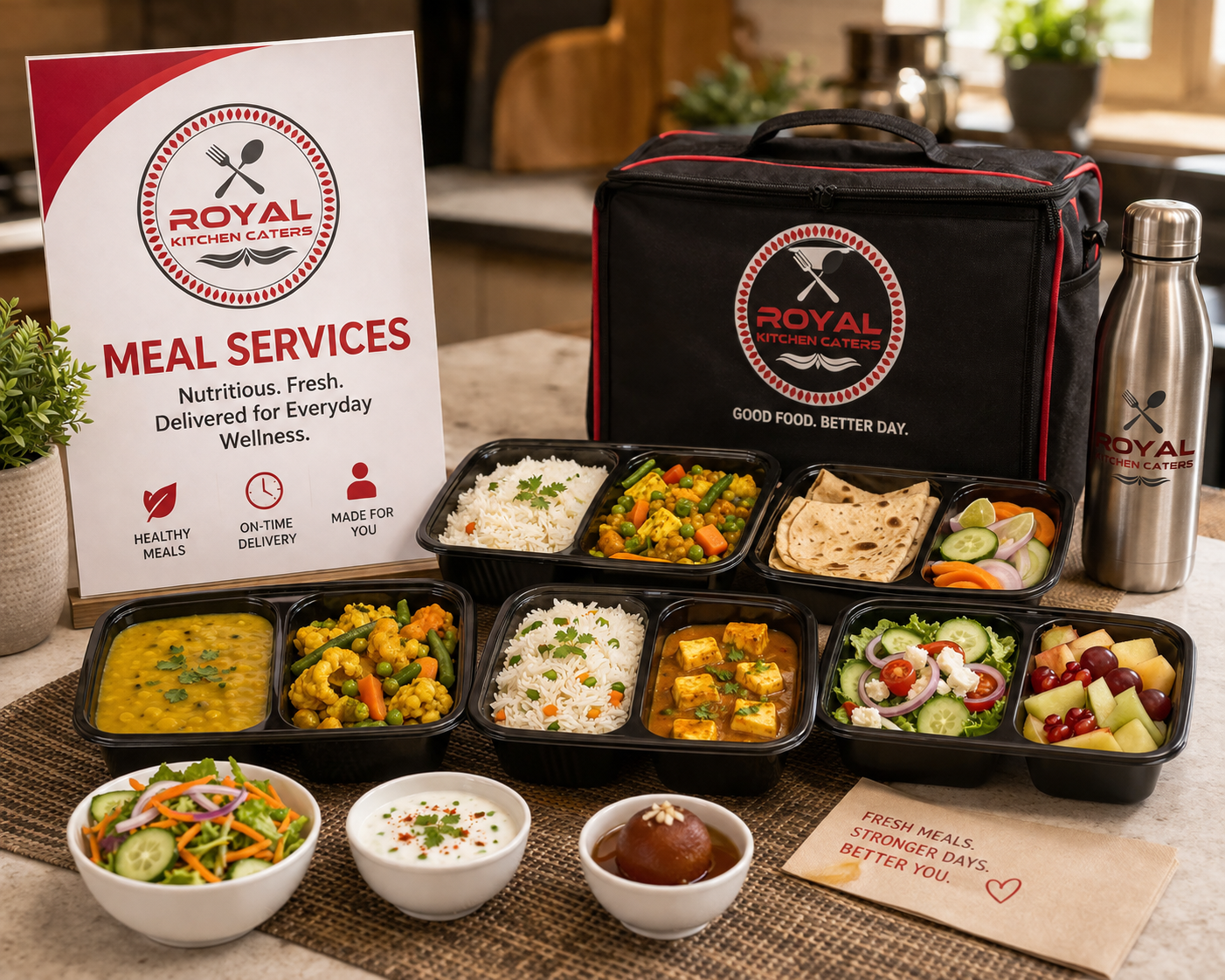
Professional office meal services make healthy eating easier by providing employees with fresh and balanced meals every day.
Key advantages include:
Consistent meal quality.
Time savings.
Better portion control.
Hygienic preparation.
Customized menus.
Reduced employee stress.
Organizations no longer need to depend on outside restaurants or irregular food deliveries.
Healthy Snacking Ideas for Offices
Employees often feel hungry between meals. Replacing unhealthy snacks with nutritious options can improve energy levels.
Healthy office snacks include:
Fruit bowls.
Roasted nuts.
Yogurt cups.
Sprouts.
Corn salad.
Roasted makhana.
Protein bars.
Vegetable sandwiches.
Healthy snacks reduce cravings and improve focus.
How Meal Planning Improves Employee Wellness
Corporate wellness is not limited to fitness programs and medical benefits. Nutrition plays an equally important role.
Healthy meal plans contribute to:
Better Physical Health
Nutritious food strengthens immunity and reduces health risks.
Improved Mental Health
Balanced diets support emotional well-being and stress management.
Stronger Team Morale
Shared meal experiences help employees connect and build relationships.
Higher Employee Retention
Companies that prioritize employee welfare often retain talent more effectively.
Importance of Hygiene in Corporate Catering
Food quality goes beyond taste. Hygiene and safety are equally important.
Professional catering teams focus on:
Clean kitchens.
Fresh ingredients.
Proper food storage.
Safe transportation.
Trained staff.
Quality checks.
Sanitized serving stations.
Employees feel more confident when they know that their meals are prepared under strict hygiene standards.
Customizing Meal Plans for Different Employee Needs
Every workforce is diverse. A single menu cannot satisfy everyone.
Corporate meal plans should consider:
Vegetarian preferences.
Low-oil options.
High-protein meals.
Diabetic-friendly choices.
Gluten-free alternatives.
Low-spice meals.
Festival specials.
Customization ensures that employees feel valued and included.
Healthy Catering for Corporate Events
Corporate events often feature rich and heavy food options. However, organizations are increasingly opting for healthier menus.
Popular healthy event choices include:
Fresh salads.
Grilled dishes.
Paneer starters.
Millet-based dishes.
Fruit counters.
Low-sugar desserts.
Soup stations.
Live healthy-food counters.
Healthy event catering allows employees to enjoy celebrations without compromising nutrition.
How Companies Can Encourage Better Eating Habits
Organizations can promote healthier lifestyles through simple initiatives.
Provide Nutritious Meals
Offer balanced lunches and healthy snacks.
Schedule Meal Breaks
Encourage employees to take proper lunch breaks.
Promote Hydration
Install water stations and provide healthy beverages.
Conduct Wellness Sessions
Invite nutrition experts to educate employees.
Offer Variety
Rotate menus regularly to keep meals exciting.
Gather Feedback
Understand employee preferences and improve accordingly.
Small changes can create lasting improvements in workplace culture.
How Companies Can Encourage Better Eating Habits
Organizations can promote healthier lifestyles through simple initiatives.
Provide Nutritious Meals
Offer balanced lunches and healthy snacks.
Schedule Meal Breaks
Encourage employees to take proper lunch breaks.
Promote Hydration
Install water stations and provide healthy beverages.
Conduct Wellness Sessions
Invite nutrition experts to educate employees.
Offer Variety
Rotate menus regularly to keep meals exciting.
Gather Feedback
Understand employee preferences and improve accordingly.
Small changes can create lasting improvements in workplace culture.
Managing meals for hundreds or thousands of employees every day requires expertise, planning, and consistency.
Experienced catering teams understand:
Large-scale food preparation.
Menu planning.
Hygiene protocols.
Timely delivery.
Event management.
Staff coordination.
Quality assurance.
Professional caterers combine culinary skills with operational excellence to ensure smooth service every day.
Building a Healthier Workplace Through Food
Healthy eating is not just a personal responsibility—it is a shared effort between employees and employers. Businesses that invest in nutritious meal programs create environments where people can thrive.
A thoughtfully designed meal plan:
Supports employee health.
Increases productivity.
Improves workplace morale.
Encourages positive habits.
Strengthens organizational culture.
Whether it is daily office lunches, corporate cafeterias, meal subscriptions, or premium event catering, food has the power to transform the workplace experience.
Conclusion
Healthy meal plans are becoming an essential part of modern corporate life. Employees who have access to fresh, nutritious, and balanced meals are more likely to stay energized, productive, and satisfied at work.
Organizations in Noida and Greater Noida are increasingly recognizing the value of professional catering services that focus on quality, hygiene, and nutrition. From daily office lunches to large corporate events, carefully planned meals contribute significantly to employee well-being and business success.
As workplaces continue to evolve, healthy food will remain at the center of employee engagement and productivity. Investing in better nutrition is not simply about serving meals—it is about building stronger teams, healthier workplaces, and a more successful future for everyone involved.
Submit a Comment